
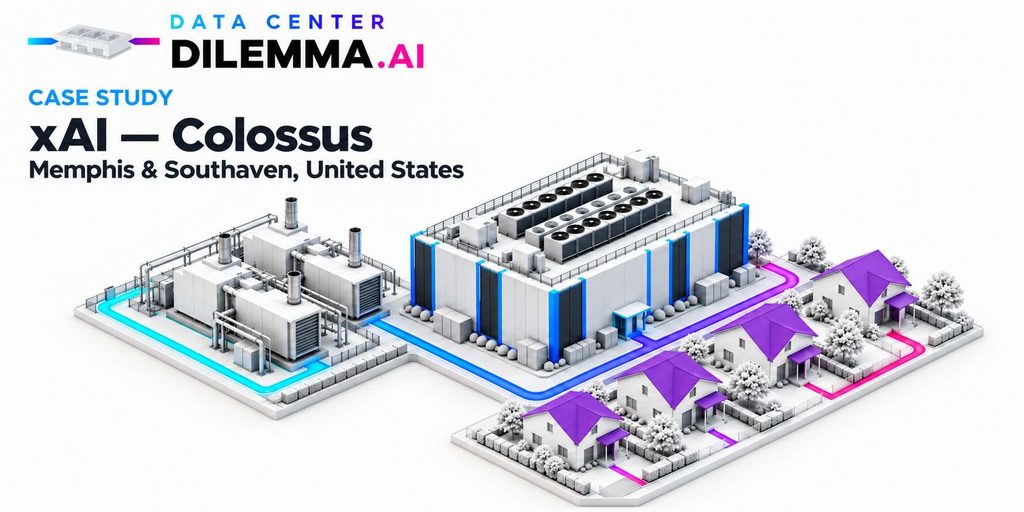
“Temporary” describes a developer’s equipment plan. Neighbors still have to live through the operating hours.
Around xAI’s Memphis–Southaven expansion, residents have alleged noise, vibration and particulate impacts in a lawsuit; those claims remain unproven. An agreed order schedules retirement of temporary Mississippi turbines, leaving a transition period in which the power supply and its local effects remain central to the project.
This dispute exposes a community problem inside the race to bring computing capacity online. The business gains from moving quickly arrive on its own timetable. Nearby people experience whatever equipment is needed to achieve that speed. Calling generation temporary answers how the developer intends to replace it. It leaves residents asking what protection they have while it runs.
That gap matters because the power supply is part of the product being delivered. A data hall cannot operate without it. Decisions about turbine numbers, operating hours and commissioning therefore belong in the same conversation as the computing capacity they support. Separating them makes the development look simpler than the experience of living nearby.
The earlier test should have been whether the combined operation could run on acceptable local terms from startup. Assessing one machine in isolation would miss the question. The relevant picture includes the fleet, simultaneous operation, nearby homes, existing background conditions and the periods when people are most exposed.
A credible temporary arrangement also needs an ending residents can examine: replacement capacity, enforceable dates, measurable operating limits and a response if the transition slips. Without that, the neighborhood carries uncertainty that the project schedule has failed to resolve.
Community engagement becomes practical when a complaint can produce a visible operational response. Published monitoring, independent checks and a named person accountable for corrections give residents something more useful than another assurance that permanent infrastructure is coming.
For a developer, these requirements affect how much capacity can responsibly start and when. They belong in commissioning decisions, before commercial commitments make slowing down expensive.
The business question is straightforward: if the planned power transition takes longer, who absorbs the consequences? A project has not finished its power planning while that answer defaults to the people next door.