
A data center strategy can have money, technology, land, and government support behind it and still depend on people who never agreed to the plan.
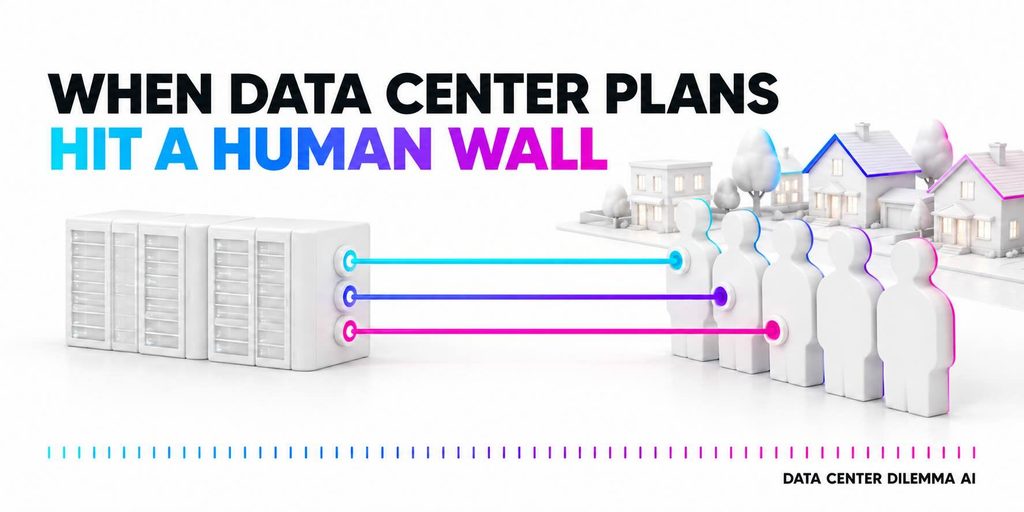
That is where the strategy meets its limits. A community is a place where people live, pay bills, use water, and expect a say in decisions that affect them. It cannot be managed like a digital platform.
The question for major developers and technology companies is whether they recognize those limits and are willing to change the strategy itself.
The wall is already affecting business decisions
Community acceptance has financial consequences. Reuters reports that lenders are considering community support alongside permitting readiness and credit quality when assessing data center projects. Resistance can affect whether investment becomes operating infrastructure.
That does not establish that every company is arrogant or every objection is justified. It does challenge the assumption that sufficient capital and official support will secure the outcome.
A future promise has to answer a present concern

The benefits of AI, digital infrastructure, and economic development deserve examination. So do the terms under which a particular community is being asked to accommodate them.
A promise of future prosperity does not settle who pays for a grid upgrade today. A national competitiveness argument does not answer a resident’s question about noise. Announced investment does not establish how much value stays locally or who carries the risk if the project changes.
When those questions receive another explanation of how wonderful the future will be, the disagreement remains unresolved. The company thinks it has explained the benefits; residents think it has ignored the question.
The future may be impressive. It still needs a local address.
More resources do not automatically produce agreement
Money can purchase land, equipment, and expertise. It can fund infrastructure and meaningful local benefits. Those are substantial advantages.
But money does not establish consent, make every location suitable, or resolve competing claims on resources. Government approval and community trust are different things. A strategy that treats them as interchangeable risks discovering the distinction after commitments have been made.
Calling resistance a communications problem assumes the underlying proposal is already right. Sometimes the explanation needs work. Sometimes the project does.

The test is what can change
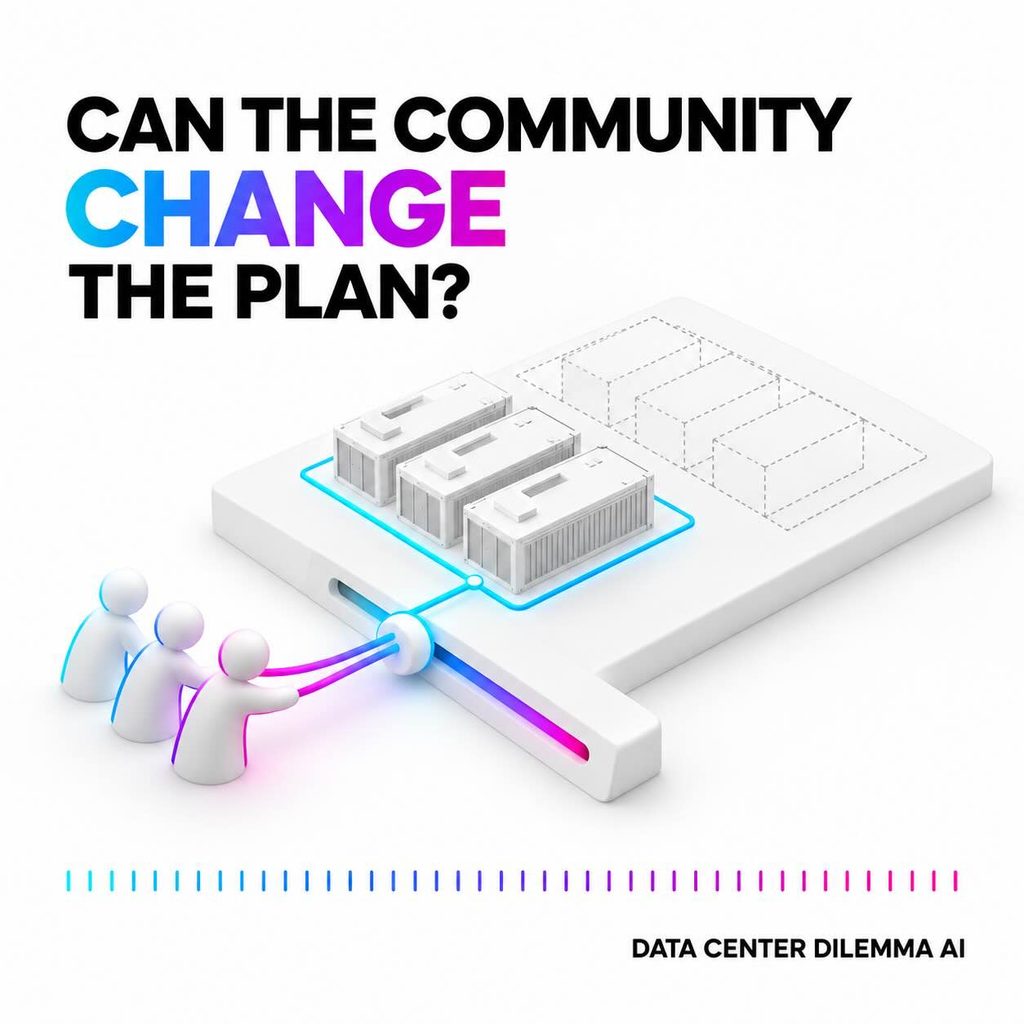
A new strategy would make community acceptance a starting condition of project design. It would give local concerns the ability to change location, scale, resource use, timing, financial obligations, or whether the project proceeds.
That requires internal authority. If the people responsible for community engagement cannot influence those decisions, their job is largely to explain a plan somebody else has already settled.
Engagement without the possibility of change is a presentation with refreshments.
For Data Center Dilemma AI, the test is concrete: what changed because the community had a say, who committed to it, and how will that commitment be enforced?
Who benefits? Who pays? Who decides? Who carries the risk?
Community opposition alone does not prove a project should stop. Investment alone does not prove it should proceed. The answers have to stand up for the actual project in the actual place.
Are developers willing to change the plan, or only willing to change how they sell it?