
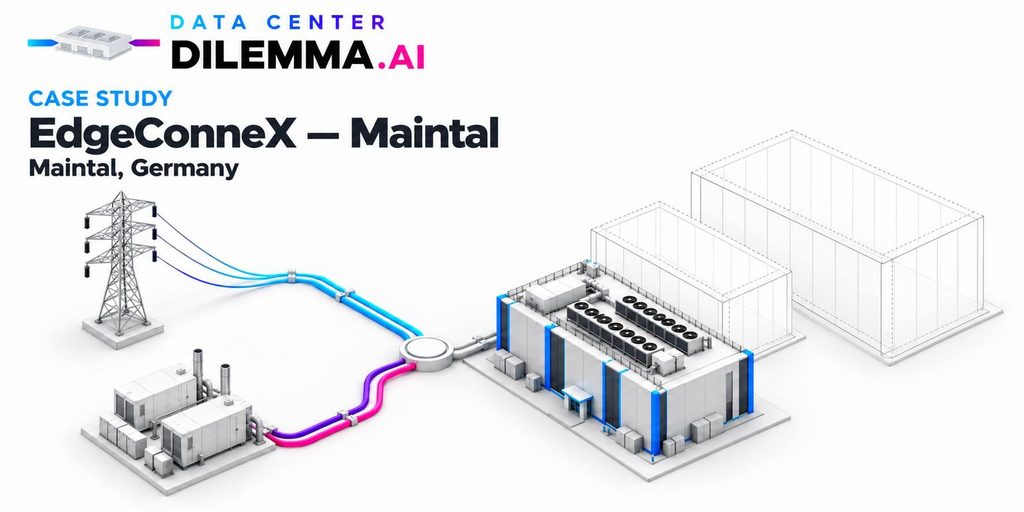
A power workaround can move a data center closer to operation while moving its industrial effects closer to people’s homes.
In Maintal, proposed gas generation for an EdgeConneX data center drew opposition from residents and councillors over noise, safety and emissions. The energy concept went back under review; the project’s final cancellation has not been established.
The community failure exposed here is a mismatch between the problem being solved and the people being asked to absorb the solution. A developer needs sufficient electricity on a commercially useful timetable. Neighbors need an acceptable place to live. On-site generation connects those two concerns directly, making the power choice part of the relationship between the project and the town.
Treating that choice as a supporting technical detail understates the decision. Generating equipment changes what happens on the site, what may be heard beyond it and what authorities must examine. The neighborhood is being asked to host the means of producing electricity as well as the computing operation that consumes it.
That proposition deserves its own clear explanation before capacity and delivery dates become fixed expectations. How would the equipment operate? Under which conditions? What protections could be enforced? What would happen if the intended replacement supply arrived late or proved insufficient?
The earlier commercial comparison should have included the community consequences of each credible power route. Waiting for a grid connection has a cost. A smaller first phase changes revenues and capital needs. Another location changes the development plan. On-site generation brings obligations and local exposure that also have to be priced and tested.
If every alternative is rejected because it affects the desired schedule, the neighborhood can become the place where the unresolved infrastructure problem lands. Opposition then reopens a decision that should have remained open in the project model.
A better process would put these alternatives in front of local decision-makers while they could still change the investment. It would make clear which impacts were avoidable, which tradeoffs remained and who would be responsible for performance.
Maintal’s business lesson starts before the generator selection: decide what power arrangement the location can reasonably support, then set the data center’s scale and timetable around that answer.